
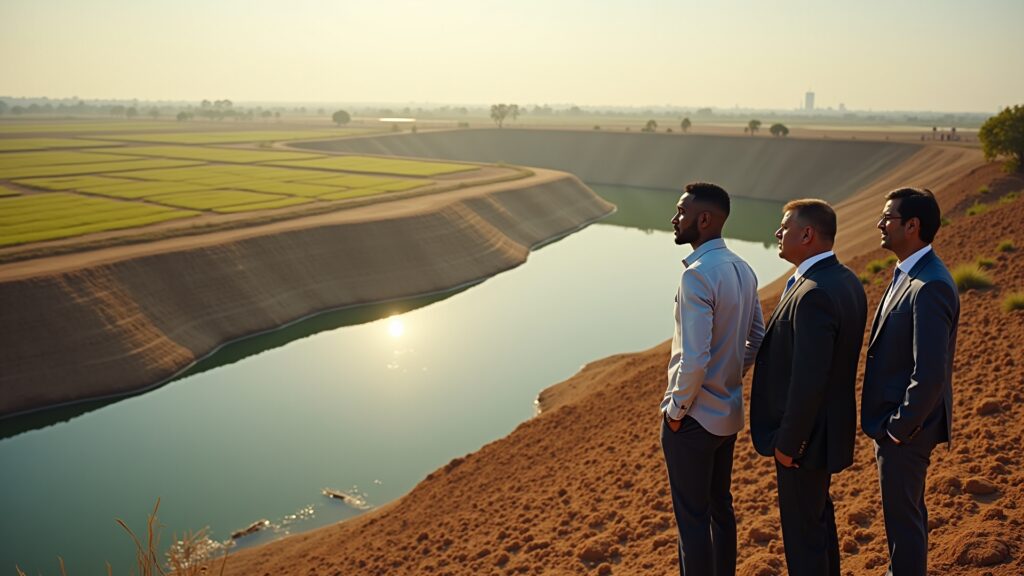













As a leader in India’s agribusiness ecosystem, you face a pivotal challenge shaping the future of agricultural profitability and sustainability: the warning signals from the country’s reservoir water storage. With nearly 35% of India’s key reservoirs holding less than half of their capacity, water scarcity isn’t just a distant climatic concern — it is an immediate business and operational reality demanding your strategic focus. Understanding these water storage trends equips you to navigate disruption in irrigation, mitigate risk across supply chains, and recalibrate your investment and innovation priorities. This article unpacks what this means for your business and the broader agricultural landscape.
Why This Matters to You
Your decisions ripple across farming communities, supply networks, finance models, and market opportunities. Water drives crop yields and rural livelihoods — when reservoir capacity dips below critical thresholds, it threatens farm output, commodity prices, and the economic viability of agribusiness ventures. For CEOs, investors, and policymakers, recognizing how reservoir water storage shortfalls translate into agriculture water risk is essential for safeguarding profitability, ensuring sustainability, and adapting to India’s evolving climate reality.
What Is Happening With India’s Reservoir Storage?
Current data shows that 35% of India’s major reservoirs are under 50% of their storage capacity. This condition reflects a complex interplay of monsoon variability, rising water demand from diversified sectors, sedimentation reducing reservoir volume, and infrastructure inefficiencies. Reduced reservoir capacity impacts irrigation schedules and water availability for several crops critical to India’s agri-economy.
Regions dependent on reservoir-fed irrigation risk facing water stress during key growing periods, affecting not just crop yields but the entire supply chain—from seed to market. The liquidity of water in these reservoirs serves as a pulse check on agricultural productivity and rural economic health.
Key Impact Areas for Agribusiness and Agriculture Finance
This reservoir storage downturn influences the sector in several consequential ways:
- Irrigation Sustainability: Water availability shortfalls necessitate shifts toward precision irrigation, water-saving technologies, and crop diversification strategies to maintain output.
- Agribusiness Risk Management: Supply chains become more vulnerable to climatic shocks, making contingency planning and dynamic resource allocation non-negotiable.
- Investment Prioritization: Capital inflows must increasingly favor agritech innovations focused on water efficiency, climate resilience, and monitoring systems.
- Policy and Regulation: Growing water scarcity heightens pressure on regulatory frameworks to promote sustainable water use and incentivize conservation.
Strategic Insights: Turning Water Scarcity Into Opportunity
Facing this water challenge requires strategic foresight beyond reactive measures. Water scarcity is an intrinsic climate risk shaping your long-term planning:
- Leverage Data-Driven Water Management Solutions: Implement IoT-powered reservoir monitoring and remote sensing to optimize water allocation and reduce wastage.
- Enhance Collaboration Across Stakeholders: Pool resources between business owners, technology providers, government agencies, and finance institutions to implement integrated water management systems.
- Innovate Crop Choices and Agronomy Practices: Adopt drought-resistant crop varieties and precision agronomy tailored to localized water availability forecasts.
- Assess Financial Products for Water Risk Mitigation: Develop investment vehicles and insurance products that hedge against irrigation uncertainties and climate risks.
Practical Takeaways for Agribusiness Leaders
- Understand reservoir storage data and monitor trends regularly to anticipate water availability challenges and adjust operational plans accordingly.
- Invest in agritech solutions that improve irrigation efficiency and water use transparency across your value chain.
- Incorporate water risk assessment into your financial models and business continuity planning.
- Engage with policymakers to advocate for supportive water governance frameworks that align with business sustainability goals.
- Explore diversification strategies in cropping and supply chain configurations to buffer against localized water scarcity.
“In agriculture, timing is rarely just operational — it is strategic.”
“The real opportunity is not in reacting late, but in understanding where the market is moving next.”
Risks and Challenges Ahead
While addressing reservoir capacity challenges, remain aware of critical risks including:
- Infrastructure Decay: Many reservoirs need renovation to restore effective capacity, requiring significant investment and policy support.
- Regulatory Uncertainty: Shifting water rights and allocation policies may introduce compliance complexities that can disrupt established operations.
- Climate Volatility: Increasing unpredictability in monsoon patterns and extreme weather events complicates water resource planning.
Mitigating these risks calls for proactive measures anchored in strong data analytics and cross-sector cooperation.
What to Watch Next
Monitor government water storage reports, climate forecasts, and emerging agritech innovations focusing on water risk. Keep an eye on policy reforms in water resource management, as they will redefine operational and investment landscapes. Investors should track developments in water-efficient crop technologies and finance instruments designed for resilience.
Conclusion
India reservoir water storage trends are a critical indicator of agriculture water risk you cannot afford to overlook. As reservoir capacities dwindle below 50% in a significant portion of key water bodies, your strategic response will determine how well you navigate upcoming challenges in irrigation sustainability, supply chain reliability, and climate adaptation. Embrace data-driven decision-making, collaborative innovation, and financial foresight to safeguard your agribusiness from escalating water scarcity risks and seize opportunities for resilient growth.
“When policy, technology, and farm economics align, growth becomes more scalable.”