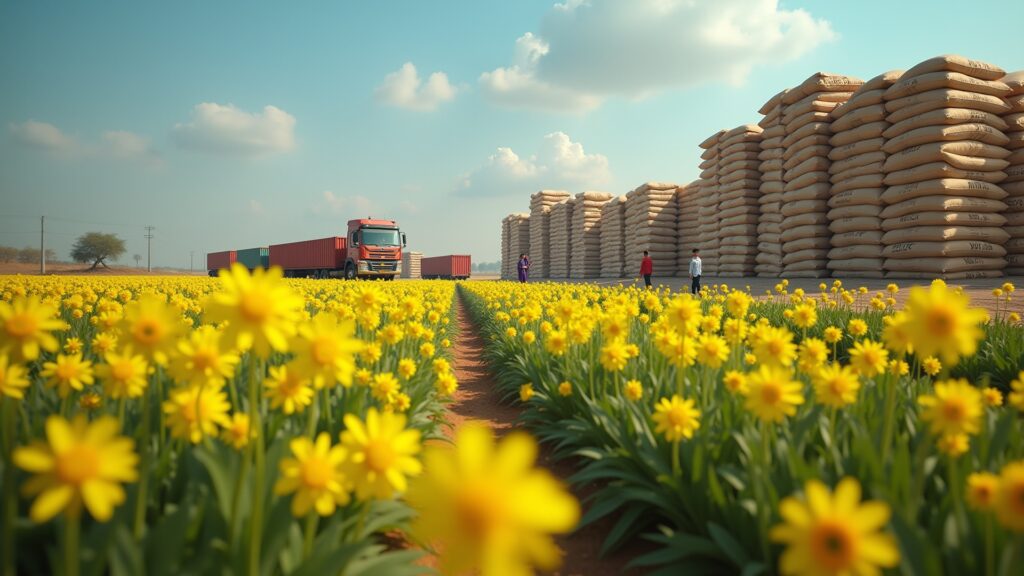













As a leader or investor in India’s agribusiness ecosystem, you can’t afford to overlook pivotal shifts that ripple through the fertilizer supply chain. National Fertilizers Limited (NFL)’s recent decision to raise security deposit requirements for its dealers presents such a scenario — a strategic inflection point that demands your immediate attention. This move not only affects the operational fluidity of fertilizer distribution but also challenges the liquidity landscape that underpins rural agricultural markets. Understanding this development is crucial to safeguarding your business interests and ensuring resilience across the agri supply chain.
Why This Matters to You
Your decisions as an agribusiness owner, CEO, or investor hinge on the stability and efficiency of farm input availability. Fertilizers remain a cornerstone of India’s agricultural productivity, and their timely and affordable distribution impacts crop yields, farm profitability, and food security. NFL’s raised dealer security deposits will directly influence dealer working capital, potentially constraining their ability to stock and supply fertilizers efficiently. This financial strain might cascade into supply disruptions, pricing fluctuations, and heightened rural market risks — variables you must strategically manage to maintain competitive advantage and market positioning.
What Is Happening
National Fertilizers Limited, a key player in India’s fertilizer industry, has increased security deposit requirements from dealers significantly. This policy revision has sparked strong opposition within the fertilizer trade community, as dealers face increased financial obligations upfront. The raised deposits effectively tighten dealer liquidity, placing pressure on their cash flow and operational capacity.
Dealers reliant on credit and working capital to maintain inventory levels might be compelled to reconsider their financing arrangements or reduce their supply footprint. The change signals a tightening regulatory and financial environment within the fertilizer trade, reflective of broader efforts to stabilize fiscal health but with evident trade-off risks for distribution efficiency.
Strategic Impacts on Agribusiness and Market Dynamics
This development triggers several critical impacts within the agribusiness and fertilizer supply chain realm:
- Dealer Credit and Operational Capacity: With higher upfront security deposits, dealers’ cash cycle elongates, which could reduce their ability to invest in inventory or diversify product offerings.
- Supply Chain Continuity Risks: Limited liquidity might cause bottlenecks in fertilizer stocking and distribution across rural hubs, potentially disrupting the supply chain and raising input costs.
- Pricing and Market Stability: Reduced dealer flexibility may lead to localized price volatility, impacting farmers and downstream agribusinesses alike.
- Pressure on Farm Input Finance Models: The shift challenges existing credit schemes and financing approaches, necessitating innovative responses from lenders and agritech platforms.
Strategic Analysis and Deeper Insight
Increasing dealer security deposits is a double-edged sword. On one side, it improves financial discipline by reducing defaults and ensuring more committed partnerships. On the other, it risks squeezing dealer margins and working capital, especially for smaller players, which may lead to consolidation or exit from the market.
For agribusiness leaders like you, this reality underscores the imperative to adopt sophisticated risk management and financing solutions. Leveraging agritech innovations — such as digital credit scoring, supply chain financing platforms, and real-time inventory management — can help mitigate liquidity pressures. Additionally, policy advocacy aimed at balancing regulatory requirements with dealer sustainability is crucial to maintain a competitive and efficient fertilizer ecosystem.
“In agriculture, timing is rarely just operational — it is strategic.” Your ability to anticipate the ramifications of policy tweaks and adapt supply chain or financing strategies accordingly will determine your resilience and growth trajectory.
Practical Takeaways for Agribusiness Leaders and Investors
- Assess dealers’ working capital and credit health more rigorously before entering or renewing partnerships.
- Explore cooperative financing models or strategic alliances with banks and NBFCs to ease liquidity pressures on dealers.
- Invest in agritech solutions that provide transparency, real-time data, and credit facilitation in the fertilizer supply chain.
- Monitor regional supply chain bottlenecks closely to anticipate and manage price volatility risks promptly.
- Engage actively with policymakers to advocate for balanced regulatory frameworks that support both fiscal prudence and market viability.
Expert Perspective
“The real opportunity is not in reacting late, but in understanding where the market is moving next.”
“When policy, technology, and farm economics align, growth becomes more scalable.”
Risks, Challenges, and Cautionary Notes
While the increased security deposits may stabilize financial discipline for National Fertilizers Limited, there remains a tangible risk of dealer attrition, especially among small and medium enterprises that operate on narrow margins. Reduced dealer participation could fragment supply chains, increase reliance on fewer distributors, and impair rural market access.
Moreover, these shifts may exacerbate rural market risks by affecting fertilizer availability during peak cropping seasons, potentially driving pricing spikes or substitution with lower-quality inputs, both detrimental to farm productivity and sustainability.
What You Should Watch Next
- Adjustments in dealer financing practices by banks and alternative lenders targeting this sector.
- Emerging agritech innovations designed to optimize input supply chain liquidity and transparency.
- Government policy responses or modifications to mitigate unintended trade disruptions.
- Signs of dealer network consolidation or shifts in regional supply dominance.
Conclusion
NFL’s move to increase dealer security deposits is a key regulatory shift with deep implications for India’s fertilizer supply chain and agribusiness finance landscape. As a business leader, investor, or policymaker within this ecosystem, you must proactively navigate these changes by embracing innovative financial solutions, engaging with policy discourse, and leveraging technology-driven insights.
Understanding the evolving dynamics of India fertilizer trade, the challenges faced by dealers, and the strategic opportunities ahead will equip you to not only sustain but also enhance your competitive positioning in a complex and vital agricultural market.
Remember, in this changing landscape, your strategic foresight and agility will be your most valuable assets.