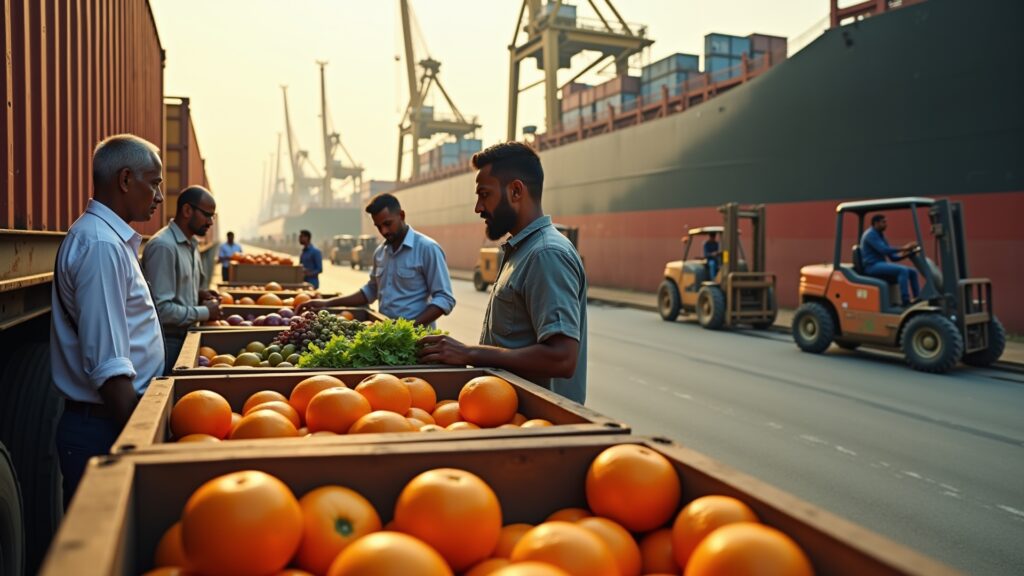














As a leader or investor in Indian agriculture, you are at a pivotal crossroads. India’s evolving agriculture policy is no longer just about increasing production volumes; it is about blending quantity with quality to unlock sustainable and profitable growth. This nuanced direction challenges you to rethink your strategic approach, capitalizing on emerging opportunities across agribusiness, agritech, and rural markets, while mitigating risks inherent in today’s fast-changing landscape.
Why This Dual-Focus Policy Matters to You
Your business decisions in agriculture hinge on policies that shape market dynamics, access to resources, and consumer preferences. The government’s fresh emphasis on both quantity-led and quality-led growth in agriculture signifies a more holistic framework designed to elevate farm productivity in India without compromising on standards. This means enhanced returns for value-driven products, streamlined supply chains, and stronger rural economies—all critical for your long-term competitiveness.
Understanding India’s Shift: What Is Happening?
The new policy framework announced by leaders like Shivraj Singh Chouhan signals a strategic shift from mere production maximization to integrating quality benchmarks into crop and agricultural output. It aims to:
- Expand agricultural yields and total output across key crops
- Elevate produce quality to meet domestic and international standards
- Incentivize innovation in farm practices and agritech adoption
- Support infrastructure development to improve supply chain efficiencies
- Drive rural economic growth by fostering sustainable agribusiness models
This approach recognizes that quantity alone no longer ensures profitability in an increasingly competitive global market. Quality is becoming a vital differentiator across value chains, requiring your business to adapt and invest accordingly.
Key Business and Market Impacts for Your Agribusiness
This dual-pronged agriculture policy influences several critical areas where your enterprise must stay ahead:
- Farm Productivity with Quality Control: Higher yields paired with quality assurance will demand investment in agritech solutions such as precision farming, real-time monitoring, and genetic advancements.
- Supply Chain Resilience and Transparency: Enhanced infrastructure coupled with quality grading standards means better traceability, reduced wastage, and improved market access.
- Market Differentiation and Value Addition: Products meeting quality standards can command premium pricing, boosting profitability and opening export avenues.
- Rural Economic Development: Sustainable growth will uplift rural incomes and create more consumers for agricultural inputs and technology, expanding your market base.
Strategic Insights: What This Means for Your Long-Term Growth
The intersection of quantity and quality-led growth reshapes competitive strategy in Indian agriculture. Here’s what you need to internalize:
- Integrated Innovation Is Non-Negotiable: Your investment in agritech and innovative farm management systems will differentiate your business amid policy shifts encouraging modernization.
- Policy Alignment Creates Opportunity: Aligning your strategic plans with government incentives and regulations unlocks subsidies, market access, and partnership potentials.
- Consumer Preferences Are Shifting: Quality-conscious buyers both domestically and internationally are driving demand for certified, traceable products—anticipate and fulfill these needs.
- Sustainability Enhances Brand Equity: Embrace sustainable practices that align with quality goals to build trust and long-term resilience.
“In agriculture, timing is rarely just operational — it is strategic.”
Practical Takeaways for Agribusiness Leaders and Investors
- Understand the evolving policy landscape thoroughly to identify beneficial schemes and funding.
- Invest strategically in technologies that improve both yield and quality, such as soil health monitoring and harvest technology.
- Strengthen partnerships across the supply chain to enable quality standards and reduce post-harvest losses.
- Focus on data-driven decision making to anticipate market trends influenced by quality consciousness.
- Monitor rural economic indicators linked to agriculture policy changes to gauge growth potential.
“The real opportunity is not in reacting late, but in understanding where the market is moving next.”
Potential Risks and Challenges to Navigate
While the policy’s dual focus carries great promise, challenges are unavoidable. You must be prepared for:
- Implementation Gaps: Transitioning to quality-led frameworks requires robust infrastructure and training, which may lag in some regions.
- Market Fragmentation: Diverse agricultural environments mean uneven adoption rates, complicating uniform policy benefits.
- Investment Intensity: Higher upfront costs in upgrading technology and processes may strain smaller enterprises.
- Regulatory Complexity: Navigating evolving quality standards and certifications demands continuous compliance efforts.
What to Watch Next: Key Developments on Your Radar
Stay tuned for announcements on:
- Expanded agritech funding and pilot programs specifically aimed at quality improvement.
- New export facilitation policies targeting premium agricultural products.
- State-level adaptations of the policy providing localized incentives.
- Public-private partnerships driving infrastructure upgrades in rural logistics.
“When policy, technology, and farm economics align, growth becomes more scalable.”
Conclusion: Positioning Your Business for Sustainable Agricultural Growth in India
As India’s agriculture policy pivots to balance quantity with quality-led growth, you have a timely opportunity to reimagine your agribusiness strategy. This evolution underscores the transition from volume-driven models to value-driven, innovation-led and sustainable frameworks. Align your investments, partnerships, and operational priorities to this dual-focus policy to unlock competitive advantage, enhance farm profitability, and contribute meaningfully to rural economic resilience. Ultimately, this is about securing your place in a more sophisticated, quality-conscious, and sustainable agricultural future.
Understanding and adapting to this policy direction is no longer optional—it is imperative for your sustained success in the Indian agricultural sector.