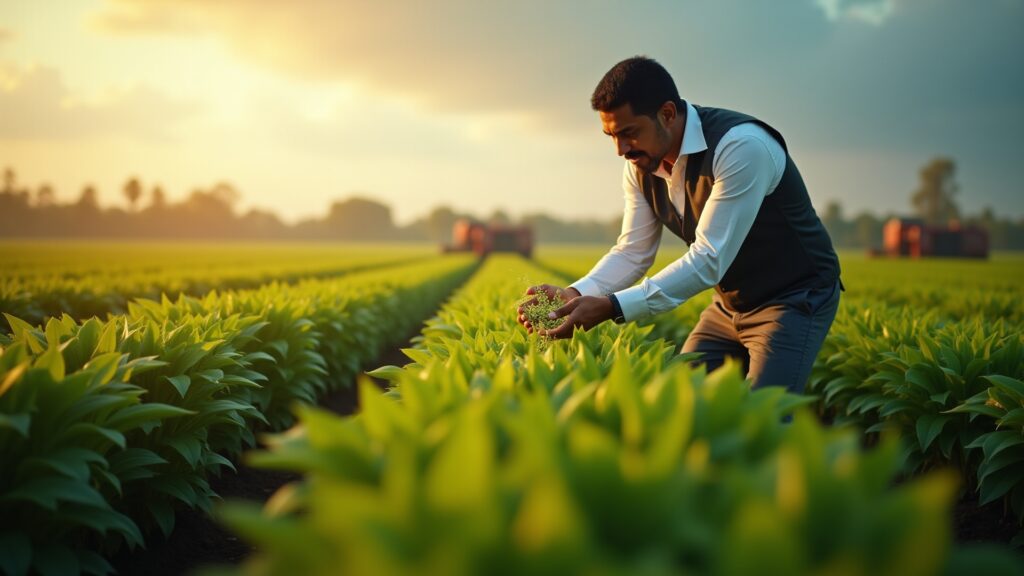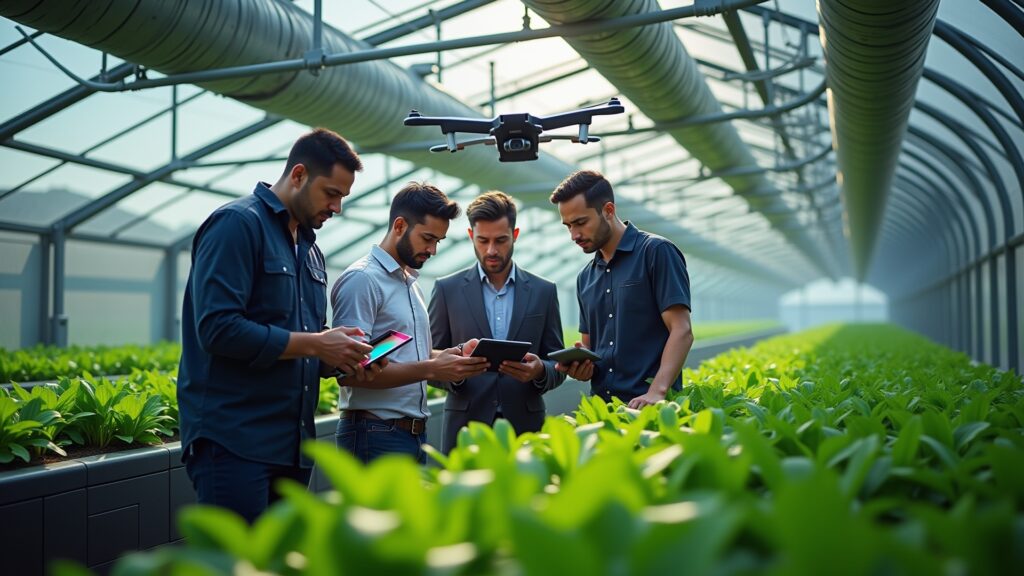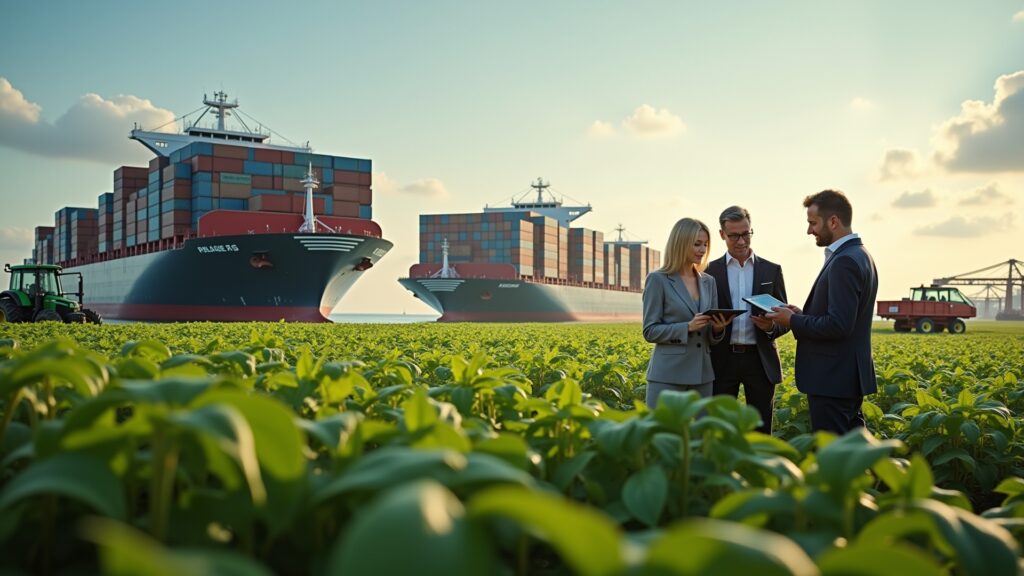






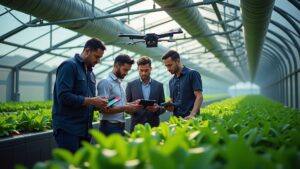






There’s a rapidly evolving landscape in agriculture, driven by innovative tools that can significantly enhance your productivity and efficiency. As an agribusiness leader, staying informed about these smart farming technologies is crucial for maintaining a competitive edge in the global market. From advanced data analytics to automation solutions, the following list highlights ten game-changing tools that you should consider integrating into your operations for sustainable growth and improved decision-making.
Key Takeaways:
- Emerging technologies like IoT, AI, and drones are transforming precision agriculture, enhancing productivity and resource management.
- Data analytics tools enable agribusiness leaders to make informed decisions, optimizing crop yields and reducing costs.
- Sustainable farming practices are increasingly prioritized, with smart tools promoting environmental stewardship alongside profitability.
Drones for Crop Monitoring
Drones have transformed crop monitoring by providing real-time data and enhancing your decision-making capabilities. You can easily identify crop health, assess soil conditions, and detect pest infestations from the sky, allowing for timely interventions that can optimize yields. As agribusiness leaders, integrating drones into your operations can lead to more efficient farming practices that ultimately improve productivity and sustainability.
Aerial imaging technology
Aerial imaging technology leverages high-resolution cameras mounted on drones to capture detailed images of your fields. This visual data enables you to analyze crop conditions effectively and make informed decisions. By monitoring growth patterns and identifying stressed areas, you can implement targeted management strategies that enhance overall agricultural performance.
Precision agriculture applications
Precision agriculture applications using drones provide you with the ability to gather detailed insights about your crops and land. By utilizing aerial imagery and various sensors, you can create precise maps that highlight areas needing attention, from soil nutrient levels to irrigation needs. This level of analysis allows for tailored agricultural practices that can significantly improve your crop yields and resource efficiency.
Incorporating precision agriculture applications into your drone usage means harnessing data analytics to optimize every aspect of your farming. You can utilize multispectral imagery to assess plant health, helping you to apply fertilizers or pesticides more selectively. Additionally, tracking vegetation indices over time enables you to adjust planting strategies and maximize resource allocation. By actively using this data-driven approach, you enhance your farm’s productivity while promoting sustainable practices, leading to long-term success in your agribusiness endeavors.
Soil Sensors
Soil sensors are indispensable tools that provide real-time data on your agricultural soil conditions, allowing you to make informed decisions. These devices monitor various parameters, including moisture, temperature, and nutrient levels. By leveraging this data, you can enhance crop yield and optimize resource usage, ultimately leading to a more sustainable farming approach. Implementing soil sensors can give you a competitive edge in the global agriculture market.
Moisture Level Tracking
By utilizing moisture level tracking through soil sensors, you can efficiently manage irrigation schedules. This technology allows you to monitor soil moisture content in real-time, ensuring that your crops receive the right amount of water without over-irrigating. With accurate data at your fingertips, you can conserve water resources and improve crop health significantly.
Nutrient Analysis Capabilities
Nutrient analysis capabilities of soil sensors enable you to assess the nutrient profile of your soil. These sensors can detect the presence and concentration of important nutrients such as nitrogen, phosphorus, and potassium, helping you optimize fertilization strategies. By accurately measuring nutrient levels, you can avoid over-fertilization and promote healthier plant growth.
Nutrient analysis capabilities not only aid in determining the current nutrient status of your soil but also help predict future nutrient needs based on crop requirements. This allows you to tailor your fertilization practices, ensuring your crops receive the exact nutrients they need at each growth stage. With this level of precision, you can enhance soil fertility over time, resulting in increased productivity and reduced environmental impact, making your farming practices more sustainable and efficient.
Autonomous Tractors
As you navigate the ever-evolving landscape of agriculture, autonomous tractors are becoming important for modern farming. These advanced machines can operate without direct human control, leveraging GPS and AI technology to optimize your farming practices. By adopting autonomous tractors, you position your agribusiness to increase productivity while reducing reliance on manual labor.
Reduced Labor Costs
By utilizing autonomous tractors, you can significantly cut down on labor expenses. These machines minimize the need for a large workforce, allowing you to operate with fewer employees while maintaining high productivity levels. This cost-saving aspect can lead to increased profitability in your agribusiness.
Enhanced Field Efficiency
Implementing autonomous tractors can drastically improve your field efficiency. With their ability to work day and night, these tractors ensure that tasks like planting and harvesting are performed at optimal times. You can achieve precise field operations, reducing overlaps and gaps in coverage, which leads to better resource utilization and time management.
Enhanced field efficiency through autonomous tractors allows you to maximize yield potential and optimize input usage. The precision in their operation minimizes waste, ensuring that seeds, fertilizers, and water are used effectively in your fields. This not only boosts your overall productivity but also contributes to sustainable farming practices. By integrating these technologies into your daily operations, you can focus on strategic decision-making while your autonomous fleet takes care of routine tasks with unparalleled accuracy.
Farm Management Software
Utilizing farm management software is necessary for optimizing your agricultural operations. These tools streamline your workflow by integrating various aspects of farming, from field mapping to financial management. With a user-friendly interface, you can track productivity, manage resources, and enhance overall efficiency, ultimately leading to better yield and profitability.
Data-driven decision making
By leveraging data-driven decision making, you can transform your agribusiness. This approach allows you to analyze historical trends and current data, enabling you to make informed choices about planting, harvesting, and resource allocation. As you adopt this method, you’ll notice improved efficiency and a clear path toward achieving your business goals.
Crop planning and analysis
Crop planning and analysis empower you to strategically assess your fields and make informed planting decisions. Utilizing software tools, you can evaluate soil conditions, weather patterns, and market demand to optimize yield and profitability. This meticulous approach reduces risk and maximizes the potential of your agricultural investments.
Effective crop planning and analysis not only help you determine the best crops to plant but also the optimal planting times and techniques. You can utilize software to generate forecasts based on climate data and historical performance, aligning your strategies with market trends. This data-backed insight leads to smarter resource management, less waste, and a more resilient farming operation, ensuring your agribusiness thrives in a competitive market.
Hybrid Seeds
Hybrid seeds represent a significant advancement in agricultural technology, blending the genetic traits of two parent plants to create offspring with enhanced characteristics. As an agribusiness leader, you should pay attention to these seeds as they offer benefits like increased vigor, uniformity, and adaptability, making them a valuable asset in the global agriculture market.
Improved Yield Potential
With hybrid seeds, you can achieve improved yield potential compared to traditional seeds. These hybrids are designed to optimize growth traits, resulting in higher productivity per acre, ultimately allowing you to maximize your returns and meet increasing food demands effectively.
Climate Resilience
Investing in hybrid seeds helps enhance climate resilience for your crops. These seeds are engineered to withstand various environmental stresses such as drought, pests, and diseases, thus ensuring reliability in diverse agricultural conditions and safeguarding your harvests.
Hybrid seeds possess traits that make them more adaptable to changing climates. You can rely on these seeds to perform well in fluctuating temperatures and varying moisture levels, allowing for more stable production in uncertain weather patterns. By incorporating hybrid seeds into your farming practices, you not only improve your resilience to climate challenges but also secure a sustainable and profitable agricultural future.
IoT Devices
IoT devices are transforming agribusiness by enabling seamless connectivity and data exchange between your agricultural tools and production systems. These smart devices allow you to manage your resources more efficiently, resulting in improved productivity and sustainability in your farming operations. With real-time insights and automated processes, IoT devices help you make informed decisions that enhance crop yields and reduce costs.
Real-time data collection
Utilizing IoT devices for real-time data collection helps you monitor various aspects of your farming operations, including soil moisture levels, weather conditions, and crop health. By accessing this data instantly, you can quickly adjust your strategies to optimize growth and resource use, ensuring that your agribusiness remains competitive in the global market.
Remote monitoring solutions
Remote monitoring solutions empower you to oversee your agricultural operations from anywhere, at any time. With IoT-enabled sensors and cameras, you gain access to critical information without needing to be physically present on-site. This capability not only streamlines your decision-making process but also allows for faster response times to potential issues, enhancing the overall efficiency of your agribusiness.
Remote monitoring solutions provide you with the ability to track equipment performance and environmental conditions continuously. You’ll receive alerts for anomalies or potential problems, enabling you to take immediate corrective actions. By leveraging mobile and web applications, you can visualize real-time data on your smartphone or computer, making it easier to manage labor, logistics, and crop management from a distance. This technology not only increases your operational efficiency but also enhances your ability to forecast and plan for future agricultural needs effectively.
Robotics for Harvesting
As you explore advancements in agribusiness, robotics for harvesting stands out as a transformative tool. These innovative machines improve harvesting efficiency while significantly reducing the physical toll on human workers. They can operate around the clock, handling intricate tasks that were once labor-intensive and time-consuming, paving the way for increased productivity in your operations.
Increased Efficiency
Implementing robotics in harvesting allows you to streamline your agricultural processes. These machines enhance precision and speed, enabling the collection of crops at optimal ripeness. This efficient operation minimizes waste and maximizes yield, ultimately leading to higher profitability for your agribusiness.
Labor-saving Technology
Adopting robotics for harvesting is necessary for overcoming labor shortages in agriculture. These machines can perform repetitive tasks that often require a significant workforce, allowing you to allocate your human resources more strategically across your operations. By reducing dependency on seasonal labor, you can ensure consistency and reliability in your harvests.
Labor-saving technology in harvesting not only alleviates the burden of labor shortages but also boosts overall farm management efficiency. As you incorporate robotic systems into your operations, you gain flexibility in workforce allocation, offering employees opportunities for more skilled tasks. This shift can lead to improved job satisfaction and reduced turnover while maintaining productivity levels in demanding harvest periods. Investing in these solutions signals a forward-thinking approach and positions your business to adapt seamlessly to evolving market demands.
Blockchain in Supply Chain
Blockchain technology is revolutionizing supply chain management in agriculture, offering you unparalleled control and visibility over your products. This decentralized ledger system enables secure tracking of goods from farm to table, ensuring that every transaction is recorded transparently and immutable. As an agribusiness leader, integrating blockchain can significantly enhance your operational efficiency and product integrity.
Transparency and traceability
With blockchain, you gain an unprecedented level of transparency and traceability in your supply chain. Every item is logged on a digital ledger, allowing you to trace the journey of your products effortlessly. This level of documentation not only supports compliance with regulations but also empowers you to provide verifiable information to consumers, enhancing their confidence in your brand.
Enhanced trust among partners
Implementing blockchain fosters enhanced trust among your supply chain partners. By providing a shared, tamper-proof record of transactions, you reduce the risk of fraud and disputes. When all stakeholders have real-time access to the same data, it promotes collaborative decision-making and strengthens relationships, thus driving better business outcomes.
This trust is further solidified as partners can independently verify each other’s claims through the blockchain. You can facilitate smoother negotiations and interactions when everyone operates on shared, accurate information. As a result, your agribusiness can thrive in a competitive market, bolstered by the genuine confidence of all parties involved in your supply chain.
Vertical Farming Systems
In your pursuit of optimizing agricultural production, vertical farming systems provide an innovative solution to increasing crop yields in limited spaces. These systems use vertically stacked layers to grow crops, maximizing land use and minimizing resource consumption. You can leverage advanced technologies, such as hydroponics and controlled environment agriculture, to ensure your plants thrive all year round, making urban farming viable and sustainable.
Space-saving Innovations
Space-saving innovations within vertical farming technology enable you to produce significant quantities of food without the need for extensive land areas. These systems utilize vertical stacking, module designs, and compact growth methods to optimize available space. By integrating these innovations, you can enhance productivity while reducing the footprint of your farming operations, making it an ideal solution for urban environments.
Year-round Crop Production
Year-round crop production is a defining advantage of vertical farming systems that allows you to grow fresh produce regardless of external weather conditions. By controlling environmental factors such as temperature, humidity, and light, you can cultivate crops continuously, leading to higher yields and more predictable harvest cycles. This stability not only enhances your supply chain but also meets consumer demand for fresh, local produce throughout the year.
Implementing year-round crop production in your vertical farming systems ensures you can meet market demands while maximizing profitability. You can use artificial lighting and climate control technologies to create optimal growing conditions, which contribute to faster growth rates and reduced crop loss. By diversifying your crop selection and maintaining consistent production, you’ll enhance your competitive edge in the global agriculture market and provide fresh produce to consumers year-round.
Conclusion
Ultimately, staying informed about the latest smart farming tools will empower you to enhance productivity, sustainability, and profitability in your agribusiness. By integrating technologies such as precision agriculture and data analytics into your operations, you can make informed decisions that optimize resource use and improve crop yields. Embrace these innovations to remain competitive in the dynamic global agriculture market and unlock new opportunities for growth in your enterprise.
Q: What are the top smart farming tools that agribusiness leaders should monitor?
A: Agribusiness leaders should monitor precision agriculture technologies, autonomous tractors, drone technology, farm management software, and smart irrigation systems. These tools enhance efficiency, reduce waste, and improve overall yield.
Q: How can smart farming tools impact yield and efficiency in agriculture?
A: Smart farming tools utilize data analytics and automation to optimize resources, monitor crop health, and manage farming practices. This results in improved crop yields, reduced operational costs, and sustainable farming practices.
Q: What role does data play in modern smart farming practices?
A: Data plays a vital role in smart farming by providing insights into soil health, weather patterns, and crop performance. This information allows farmers to make informed decisions, enhancing productivity and minimizing environmental impact.