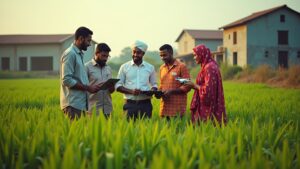
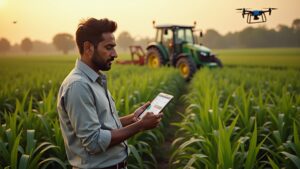





As you navigate the complexities of agribusiness and agricultural leadership in India, understanding the nation’s quest for self-sufficiency in oilseeds and pulses is imperative. Shivraj Singh Chouhan’s recent appeal to farmers encapsulates a strategic move that could redefine India’s agricultural landscape and your role within it. This initiative is not merely about increasing crop yields; it’s a transformative agenda that touches every node of the agriculture value chain—from farm finance and supply chain logistics to rural economies and sustainable practices.
Why Self-Sufficiency in Oilseeds and Pulses Should Matter to You
India’s reliance on imports for oilseeds and pulses keeps your business exposed to global market fluctuations, foreign exchange risks, and supply chain vulnerabilities. As a stakeholder—whether you are a CEO, an investor, or a policymaker—you face challenges such as inconsistent supply, volatile pricing, and margin pressures. Achieving self-sufficiency is a strategic imperative that promises greater control over supply chains, improved farm profitability, and enhanced rural empowerment. This development directly influences your decision-making on investments, crop choices, and policy advocacy.
What Is Happening: The Push for Agricultural Self-Reliance
Shivraj Singh Chouhan’s call to boost oilseed and pulse production signals a deliberate policy and leadership focus on reducing India’s import dependency. Oilseeds and pulses are critical both nutritionally and economically. India imports significant quantities to meet domestic demand, and this has implications for trade balance and strategic autonomy. Encouraging farmers to adopt better practices, investing in agri-infrastructure, and promoting sustainable farming methods are key elements in this strategy.
Key Business and Market Impacts for Agribusiness Leaders
- Supply Chain Stability: Greater self-sufficiency can insulate you from global shocks and supply disruptions, allowing steadier inputs for processing and export.
- Investment in Farm Finance: Expanding oilseed and pulse cultivation requires innovative financing solutions tailored to small and marginal farmers, enabling access to quality seeds, fertilizers, and technology.
- Rural Economy Empowerment: Boosting these crops creates rural employment, raises income levels, and stimulates ancillary agribusiness sectors.
- Market Opportunity Expansion: Self-reliance opens doors for value-added products, export competitiveness, and new business models around sustainable pulses and oilseed farming.
Deeper Strategic Insights into the Initiative
This push aligns closely with India’s larger policy vision of Atmanirbhar Bharat (self-reliant India) and dovetails with global sustainability goals. For you, integrating these priorities means reassessing your agritech adoption strategies, supply chain resilience plans, and market positioning. Digital innovation—such as precision agriculture, blockchain-based traceability, and AI-driven farm advisories—will be critical enablers.
Moreover, the move reflects the intersection of public policy and private sector agility. With government incentives and support schemes being streamlined, your strategic response must encompass partnership with farmer collectives, leveraging data analytics for yield optimization, and embedding circular economy practices to enhance resource use efficiency.
“In agriculture, timing is rarely just operational — it is strategic.”
Practical Takeaways for Agribusiness Leaders and Investors
- Understand the evolving policy frameworks targeting oilseed and pulse self-sufficiency, and align your business strategies accordingly.
- Monitor advances in sustainable agriculture technologies that improve productivity and resource efficiency.
- Focus on developing robust supply chains with transparent sourcing and quality assurance mechanisms.
- For investors, prioritize ventures enhancing farm finance accessibility and agritech solutions tailored to pulse and oilseed farming.
- Engage with rural development programs that bolster farmer entrepreneurship and capacity building.
Expert Perspectives to Guide Your Strategy
“The real opportunity is not in reacting late, but in understanding where the market is moving next.”
“When policy, technology, and farm economics align, growth becomes more scalable.”
Risks and Challenges to Navigate
While the ambition is critical, achieving self-sufficiency in oilseeds and pulses comes with challenges. You must anticipate climate variability affecting crop yields, infrastructure gaps, and the need for continuous farmer engagement and education. Market price volatility and competitive international trade dynamics also require risk mitigation strategies. Scaling sustainable practices while ensuring profitability remains a delicate balance that your leadership must navigate.
What You Should Watch Next
Track government policy updates, subsidy schemes, and technological innovations in the oilseed and pulse sectors. Watch for emerging agritech startups and financers focusing on these crops. Monitoring export-import trends will also provide clues about market equilibrium shifts. Finally, stay alert to research breakthroughs in crop resilience and soil health management that could redefine productivity thresholds.
Conclusion: Position Yourself at the Forefront of India’s Self-Sufficiency Drive
India’s ambition to achieve agricultural self-sufficiency, particularly in oilseed production and pulses farming, represents a strategic pivot with profound implications for your agribusiness decisions. By aligning with this vision, you not only mitigate dependency risks but also tap into new growth avenues grounded in sustainability and rural empowerment. As Shivraj Singh Chouhan underscores, the pathway to self-reliance requires collective strategic action—from farm-level innovation to policy support and market foresight. It’s an opportunity you cannot afford to overlook.
India agriculture self-sufficiency is not just a policy goal; it’s a business imperative for you navigating tomorrow’s agricultural ecosystem.