
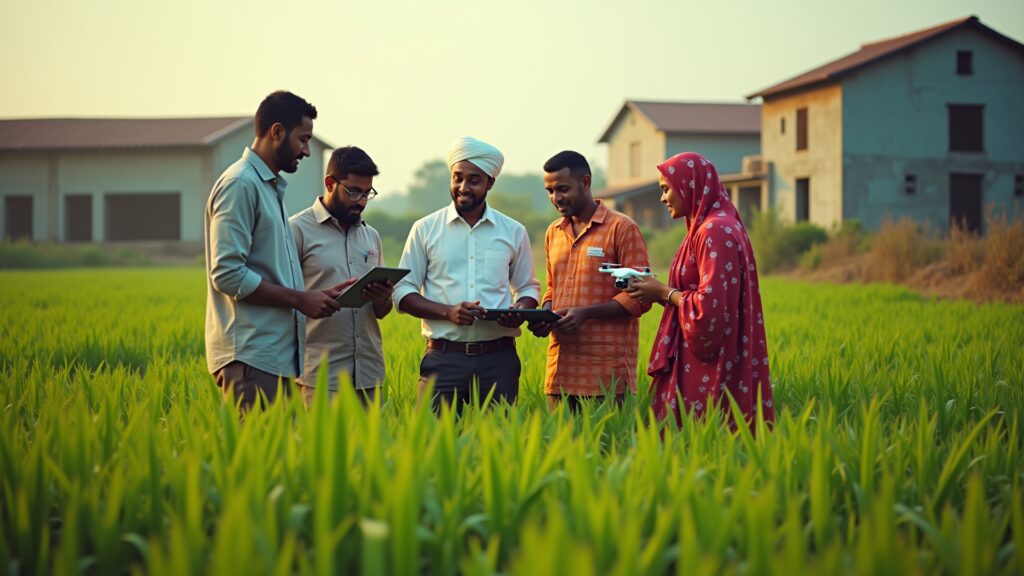













Imagine growing your agribusiness from a mere Rs 150 monthly income to a respected global platform, where your insights shape conversations at institutions like Oxford University. This is the remarkable journey of a farmer from Amravati who not only redefined his economic status but also set a new benchmark for agribusiness transformation in India. For you—whether an agribusiness leader, investor, policymaker, or progressive farmer—this story offers crucial lessons on leveraging innovation, leadership, and sustainable finance to capitalize on the burgeoning rural economy.
Why This Matters to You
The trajectory of this Amravati farmer underscores a pivotal shift in Indian agriculture—from subsistence farming to dynamic agribusiness models capable of scaling profitably and sustainably. His experience is a blueprint showcasing how you can rethink farm economics, optimize supply chains, and unlock market opportunities driven by agritech innovations and sound leadership. Understanding this transformation equips you to navigate evolving agricultural landscapes, enhance farm profitability, and contribute strategically to rural economy growth.
What Is Happening: The Transformation Unfolded
The farmer began with a modest income of Rs 150 per month, symbolizing the stark financial limitations many face in rural India. However, through calculated strategic moves—adoption of agritech solutions, diversification of cropping patterns, and engagement with sustainable finance frameworks—he revolutionized his business approach. This success culminated in international recognition that transcends typical agrarian success stories, earning him an invitation to speak at Oxford University about his agribusiness model’s economic and social impact.
Business and Agricultural Impact: A Market and Policy Game-Changer
This growth story impacts multiple facets of Indian agriculture:
- Market Opportunity Creation: It highlights how agribusinesses can unlock value chains through innovation, creating new revenue streams and reaching premium markets.
- Policy Interface: It signals the importance of supportive policies for sustainable farm finance and rural economic upliftment, which you should lobby for or integrate into your strategic planning.
- Leadership and Agritech Convergence: The integration of technological advancements with visionary leadership amplifies operational efficiency and competitiveness in agriculture.
Strategic Analysis: Unlocking the Drivers of Agribusiness Success
What did this transformation hinge on? First, an unwavering leadership vision that prioritized long-term sustainability over short-term gain. Second, the cultivation of an ecosystem: adopting agritech tools that enhanced yield prediction, risk management, and market linkage, supported by financial products tailored for smallholder scalability. Third, an adeptness in navigating policy frameworks that enabled access to government schemes and resources.
These factors combined to create a resilient agribusiness model, demonstrating how you can harness technology and policy to scale rural operations profitably.
“In agriculture, timing is rarely just operational — it is strategic.”
Practical Takeaways for Agribusiness Leaders and Investors
- Understand Your Ecosystem: Map the agritech innovations and policy incentives available to your region and business model.
- Prioritize Sustainable Finance: Integrate financial products that address cash flow challenges and enable reinvestment in technology and operations.
- Embrace Leadership that Fosters Innovation: Cultivate a mindset open to experimentation and learning from failures to adapt swiftly.
- Leverage Market Access Channels: Build or join supply chains that connect you to high-value consumer markets and export opportunities.
“The real opportunity is not in reacting late, but in understanding where the market is moving next.”
Risks and Challenges to Navigate
While this success story is inspiring, replicating it requires vigilance against common challenges. You must carefully manage risks related to technology adoption costs, fluctuating market demands, and policy shifts. Additionally, scaling operations without compromising sustainability or local community welfare is crucial. Balancing these factors demands strategic foresight and continuous monitoring.
What You Should Watch Next
Keep a close eye on developments in agritech financing models—particularly those blending microfinance, insurance, and digital credit—for their potential to reshape farm profitability. Also, monitor government initiatives enhancing rural infrastructure and export facilitation, which could exponentially boost agribusiness scalability and competitiveness.
Conclusion: Charting Your Path from Local to Global Agribusiness Success
The Amravati farmer’s journey from Rs 150 a month to the global stage is more than an anecdote. It is a strategic case study in effectively blending agriculture leadership, agritech innovation, and sustainable finance to fuel rural economy growth. By internalizing these lessons, you can architect a resilient agribusiness framework that not only grows profits but also champions sustainability and market relevance on a global scale.
“When policy, technology, and farm economics align, growth becomes more scalable.”
Embrace this narrative as you plan your next strategic moves—your agricultural business can be the next compelling success story in Indian agriculture business.