
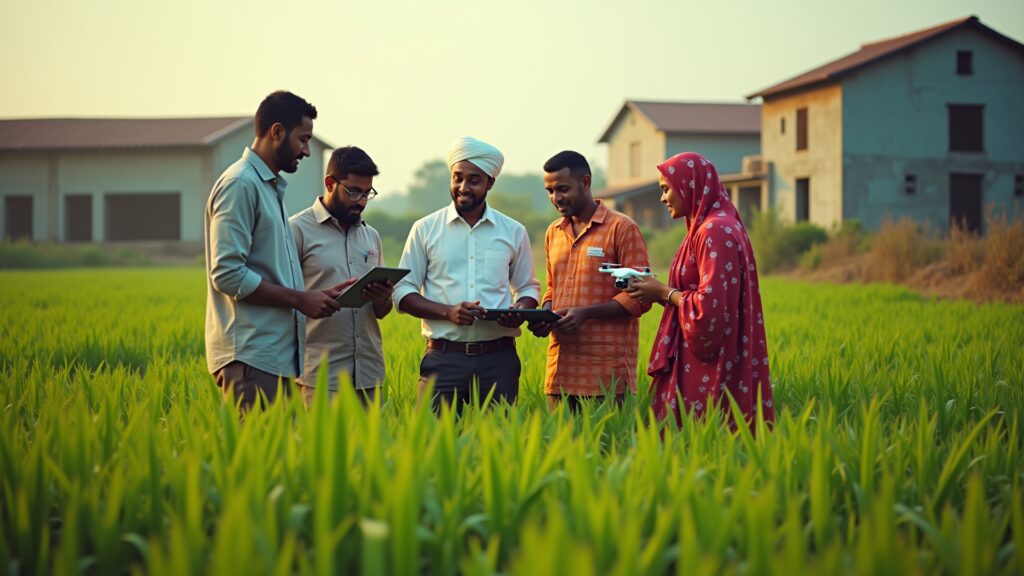













As an agribusiness leader, investor, or policymaker, you understand that the future of India’s agricultural landscape depends heavily on governance and policy alignment. At the recent Western Regional Agricultural Conference in Jaipur, Shivraj Singh Chouhan unveiled a critical centre-state agricultural reform roadmap that aims to revolutionize how agriculture policy and practice converge across India’s vast and diverse states. This roadmap is not merely a policy outline; it is your strategic signal to recalibrate how you position your business, investments, and insights in a sector poised for transformative growth.
Why These Centre-State Agricultural Reforms Matter to You
The relationship between central and state governments in India has long shaped the trajectory of agricultural productivity, sustainability, and market efficiency. For you, as a decision-maker steering your agribusiness or investment portfolio, understanding this reform roadmap equips you to anticipate policy shifts that affect regulatory frameworks, supply chain dynamics, and rural economic health. This initiative directly impacts market entry strategies, agriculture finance structures, and innovation adoption by harmonizing efforts that elevate farm profitability and sustainability.
Decoding the Centre-State Agricultural Reform Roadmap
Shivraj Singh Chouhan introduced a nuanced reform strategy that fosters better coordination between central and state agricultural policies, aiming to eradicate operational redundancies and patchy implementation that have historically slowed progress. His roadmap emphasizes three core pillars:
- Sustainable Farming Practices: Prioritizing eco-friendly methods and resource-efficient technologies to ensure long-term soil health and water conservation.
- Strengthening the Rural Economy: Enhancing rural livelihoods by easing market access, improving infrastructure, and supporting agribusiness competitiveness.
- Inclusive Agricultural Governance: Reforming governance to create transparent, accountable, and collaborative frameworks between varying government tiers.
By targeting these pillars, the roadmap aims to create a unified agricultural ecosystem that supports innovation, financing, and market participation.
Strategic Implications for Agribusiness and Market Development
What does this mean for your business strategy? The reforms suggest a shift toward more predictable, synergistic policy environments where local innovations can scale with central support. You can expect:
- Improved Investment Climate: Greater coherence between policies reduces regulatory risks and streamlines project approvals, making agritech and agribusiness ventures more attractive to investors.
- Enhanced Supply Chain Efficiency: Streamlined regulations and collaborative governance help integrate fragmented supply chains, cutting costs and improving market responsiveness.
- Accelerated Sustainable Innovation: Policy incentives may prioritize technologies that reduce environmental impact, encouraging adoption of precision agriculture, water-saving irrigation, and bio-inputs.
Deeper Insight: The Crossroads of Policy, Profitability, and Sustainability
The roadmap reveals a sophisticated understanding that India’s agricultural transformation requires both top-down policy direction and bottom-up stakeholder engagement. As you navigate this evolving landscape, your strategic decisions must balance advancing profitability with sustainability commitments. The reform framework encourages leveraging data-driven farming, better credit access, and capacity building alongside environmental responsibility — a combination that will define success in the next decade.
“In agriculture, timing is rarely just operational — it is strategic.”
Implementing these reforms could catalyze a more resilient rural economy, which means better consumer market development and increased liquidity for farmers and agribusinesses alike. This cohesion is crucial if India is to compete on the global agribusiness stage while ensuring food security and rural welfare.
Practical Takeaways: What You Should Do Now
- Monitor Policy Updates Closely: Keep a pulse on both central and state notifications that reflect reform implementation phases.
- Revisit Your Investment and Expansion Plans: Align your strategies to capitalize on emerging incentives and risk mitigation mechanisms presented by the reforms.
- Engage with Local Stakeholders: Strengthen networks that bridge state and central policy levels to influence and adapt to evolving governance.
- Invest in Sustainable Technologies: Prioritize solutions that align with the roadmap’s sustainability focus to future-proof operations and access preferential funding.
Expert Perspectives Worth Your Consideration
“The real opportunity is not in reacting late, but in understanding where the market is moving next.”
“When policy, technology, and farm economics align, growth becomes more scalable.”
Risks, Challenges, and Points of Caution
While this reform roadmap lays a promising foundation, you must remain vigilant about potential hurdles:
- Policy Execution Variability: Diverse administrative capabilities across states might slow or unevenly apply reforms.
- Resistance to Change: Traditional farming communities may require targeted education and incentives to embrace sustainable practices.
- Infrastructure Gaps: Persistent rural infrastructure deficits could limit the speed and breadth of supply chain integration.
Recognizing these challenges early can help you mitigate associated risks and position your enterprise more strategically.
What to Watch Next in India’s Agricultural Reform Journey
Track pilot programs testing these reforms at state levels and investor responses to policy changes. Keep an eye on how agritech startups and financial institutions respond with new products and services tailored to the new governance model. Equally important will be the evolving dialogue among policymakers, farmers, and the private sector about refining the roadmap in real time.
Conclusion: Positioning Yourself in the Centre-State Agricultural Reform Landscape
The centre-state agricultural reform roadmap unveiled by Shivraj Singh Chouhan signals a paradigm shift in India’s agricultural governance that you cannot afford to overlook. By fostering coherence between central directives and state actions, this framework promises enhanced sustainability, stronger rural economies, and a more competitive agribusiness landscape. Your proactive engagement with these reforms will be critical to navigating the evolving sector successfully and capitalizing on emerging opportunities within India’s agriculture market.
Integrating the centre-state agricultural reform agenda into your strategic planning will set you apart in a market where policy alignment increasingly determines which players thrive. This roadmap is your invitation to lead in innovation, governance collaboration, and sustainable growth.