













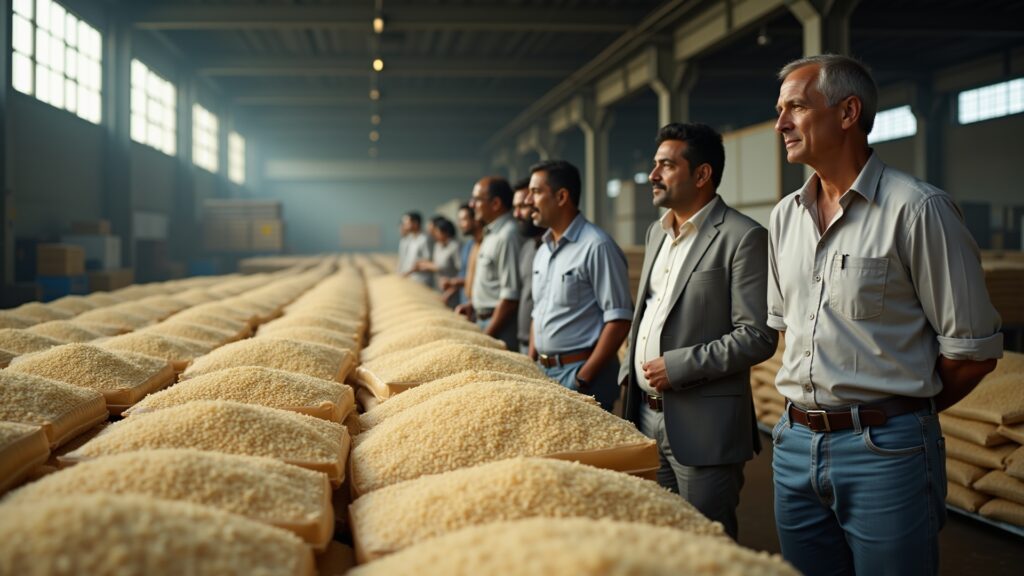
As you navigate the complexities of agribusiness in India, the recent surge in rice procurement—nearing 50 million tonnes, a 6% rise from last year—presents more than just a headline. It’s a clear signal that government policies, market dynamics, and rural economic shifts are converging to reshape the rice supply chain and its associated business opportunities. Understanding these dynamics is critical for you if you are steering investment strategies, managing supply chains, or positioning your agribusiness for sustainable growth in the evolving rice market of India.
Why This Matters to You
Your decisions as an agribusiness leader or investor depend on insights that anticipate market shifts and policy directions. The spike in India’s rice procurement volume reflects deeper strategic trends: stronger government intervention, changing farmer incentives, and increasing export potential. These elements collectively alter the landscape of the rice market India has long been a backbone of, impacting profitability, operational planning, and risk management.
Understanding the Surge: What Is Happening?
The increase to nearly 50 million tonnes in rice procurement indicates an upward trajectory driven by proactive government procurement policies aimed at securing food stocks and supporting rural incomes. Indian government agencies, aligned with agricultural policies, are incentivizing farmers through minimum support prices (MSP) and streamlined procurement processes, thus bolstering the rural economy. This procurement boost is also a response to global supply chain uncertainties, encouraging self-reliance and food security.
Key Business and Market Impacts
- Supply Chain Dynamics: Larger procurement volumes require advanced logistics, storage, and processing infrastructure. This calls for strategic investment in supply chain technology and efficiency.
- Investment Opportunities: Investors will find emerging opportunities in rice processing, warehousing, and export facilitation. The push in procurement correlates with increased demand for agritech solutions that optimize grain quality and reduce post-harvest losses.
- Policy Implications: Enhanced procurement signals more robust government involvement, increasing market stability but also requiring agribusinesses to navigate evolving regulatory frameworks.
- Rural Economy Impact: More assured procurement uplifts farmer income security, enhancing rural consumption and local economic activity—key drivers of long-term agricultural demand and supply robustness.
Strategic Insights for Agribusiness Leaders
When you assess the 6% growth in rice procurement, look beyond the volume to the strategic message it sends. This isn’t just about food security targets—it’s about the government’s intent to consolidate India’s position as a global rice supply hub, while stabilizing farm incomes and supply chain resilience.
To stay ahead, adapt your business model to embrace transparency in contract farming, invest selectively in technology that enhances traceability, and align closely with government policy shifts. Integrating these elements will increase your competitive edge and adaptability in a market marked by shifting procurement and export dynamics.
“In agriculture, timing is rarely just operational — it is strategic.”
Practical Takeaways: What You Should Do Next
- Monitor Procurement Trends: Track government policy announcements related to MSP, procurement targets, and export incentives closely.
- Invest in Agritech: Prioritize technologies that improve supply chain efficiency, grain grading, and post-harvest management.
- Strengthen Supply Chains: Build or upgrade infrastructure for storage and transport to handle increased volumes with minimal loss.
- Engage Farmers Strategically: Consider contract farming and direct sourcing models to secure stable supplies and foster long-term partnerships.
- Expand Export Readiness: Align your business operations with global quality standards to capture international market opportunities bolstered by procurement reliability.
Expert Perspectives
“The real opportunity is not in reacting late, but in understanding where the market is moving next.”
“When policy, technology, and farm economics align, growth becomes more scalable.”
Risks and Challenges You Should Consider
While the procurement rise is promising, it carries risks you must account for. Over-reliance on government procurement can obscure market signals, potentially leading to inventory glut or price distortions. Additionally, logistical bottlenecks in warehousing and transport remain significant challenges that could impact cost structures. Climate variability also adds uncertainty to production and quality. Proactively managing these risks through diversified sourcing and investment in resilient infrastructure is vital.
What You Should Watch Next
Stay alert to upcoming policy adjustments linked to MSP rates and export policies, as these will directly influence rice market dynamics. Examine how technology adoption progresses in rural areas, especially agritech solutions that partners and competitors deploy. Additionally, watch for international demand shifts influenced by geopolitical trade patterns and food security concerns, which could open or close export corridors.
Conclusion
Your strategic outlook on India rice procurement must factor in the multifaceted implications of this 6% growth surge. As the rice supply chain in India adapts to these procurement realities, you too must evolve your business approach—balancing policy responsiveness, supply chain innovation, and market foresight. This nuanced understanding and action will help you capitalize on emerging opportunities and mitigate risks in the ever-transforming rice market India offers.
Focus your attention on integrating procurement trends into your agribusiness strategy today; the path you choose will define your market leadership in India’s rice sector tomorrow.