
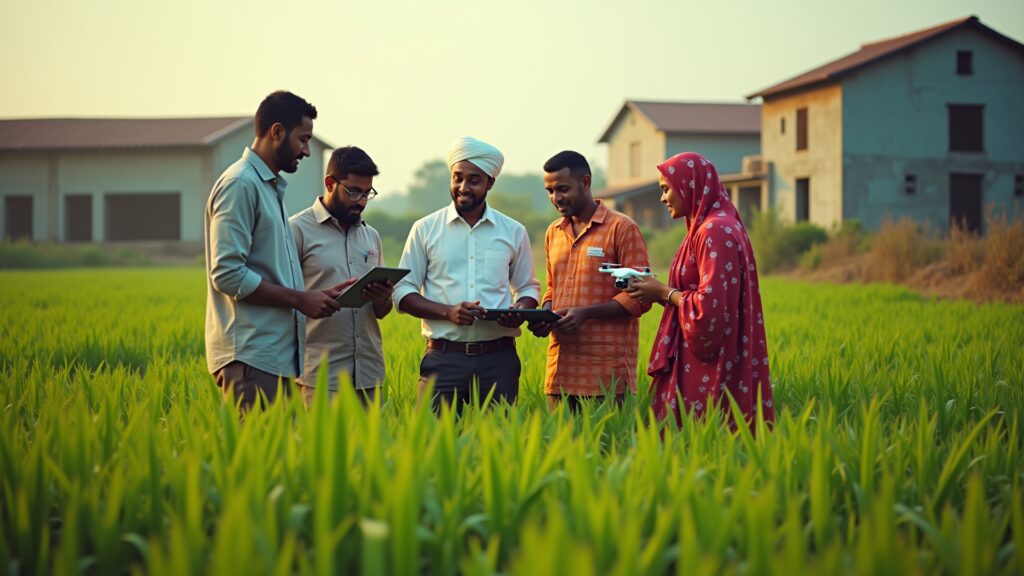













As a decision-maker in India’s evolving agriculture landscape, you face the challenge of balancing farm productivity with sustainability and energy security. The latest insights from the TERI–ETC report place Agricultural Photovoltaics (AgriPV) at the forefront of a transformative solution. AgriPV not only offers a pathway to reduce India’s fossil fuel dependence but also unlocks strategic value across agribusiness, rural energy infrastructure, and sustainable farming models. This development isn’t just a technological upgrade—it represents a new paradigm for shaping agritech innovation and agribusiness strategy in India.
Why AgriPV Matters to You and Your Agribusiness
Your business operates in an environment increasingly shaped by the dual pressures of climate sustainability and energy costs. Integrating AgriPV solutions means you can harness renewable energy directly on agricultural lands, trimming operational expenses and carbon footprints simultaneously. Beyond cost savings, this technology opens avenues for new revenue streams through energy sales or grid contributions. For policymakers and investors, AgriPV signals potential policy shifts toward incentivizing renewable rural energy. For agribusiness leaders like you, it offers a chance to lead in sustainability while improving farm profitability and resilience.
Understanding the AgriPV Innovation: What Is Happening
The TERI–ETC report underscores AgriPV as a clever integration of solar photovoltaic systems within farm fields. This dual-use approach optimizes land utility by generating solar power without compromising crop production. In practical terms, solar panels are installed at heights or in configurations that allow crops to thrive beneath them, ensuring no trade-off between energy generation and food production. This synergy enhances rural energy infrastructure by embedding decentralized clean energy directly into agricultural supply chains.
Business and Policy Implications You Should Note
- Energy Independence: AgriPV reduces reliance on costly and polluting fossil fuels, stabilizing energy expenses for farms and rural industries.
- Economic Opportunity: Adoption can stimulate rural economies by creating jobs in installation, maintenance, and local energy markets.
- Policy Alignment: AgriPV adoption aligns with India’s renewable energy targets and could benefit from emerging incentives and subsidies.
- Market Differentiation: Agribusinesses that integrate AgriPV position themselves as pioneers in green innovation, attracting sustainability-conscious investors and partners.
Strategic Insight: How AgriPV Fits into Your Long-Term Vision
Your ability to anticipate and adapt is critical amid a global push for sustainable and resilient food systems. AgriPV’s dual benefit model challenges traditional land use paradigms, enabling higher productivity per hectare both in crop and energy outputs. Deploying AgriPV aligns your operations with global environmental goals, enhances your energy autonomy, and future-proofs your business against energy price volatility and regulatory shifts.
“When policy, technology, and farm economics align, growth becomes more scalable.”
This integration will also spur innovation in agritech design—new solar panel configurations, smart energy management systems, and data-driven farm-energy synergies—that can redefine agriculture’s contribution to the rural economy.
Key Takeaways for Agribusiness Leaders and Investors
- Understand: How AgriPV not only reduces fossil fuel reliance but can dramatically cut operating costs.
- Monitor: Policy developments and incentives related to renewable energy in agriculture.
- Invest: In agritech startups and infrastructure projects focusing on AgriPV and decentralized energy solutions.
- Collaborate: With technology providers to customize AgriPV solutions suited to your crops and farm conditions.
- Plan: Energy integration strategies that incorporate solar as a core element of your agribusiness model.
“The real opportunity is not in reacting late, but in understanding where the market is moving next.”
Risks and Challenges to Keep in Mind
While promising, AgriPV adoption is not without hurdles. Initial capital expenditure can be significant, and you must carefully evaluate the return on investment in your specific context. Technical challenges include optimizing solar panel placement for different crops and ensuring maintenance expertise is locally available. Moreover, policy frameworks and grid integration infrastructures vary regionally, requiring due diligence before scaling.
What Should You Watch Next?
Keep an eye on evolving government policies that incentivize renewable energy in agriculture, pilot programs demonstrating AgriPV efficacy, and emerging agritech solutions that enhance system integration. Tracking investments in rural energy infrastructure will reveal new partnership and funding opportunities. Also, observe the flow of global innovation in AgriPV technology, as India’s rural economy looks to leapfrog into sustainable, scalable energy-smart agriculture.
“In agriculture, timing is rarely just operational — it is strategic.”
Conclusion: Positioning Your Agribusiness for a Sustainable, Energy-Independent Future
Integrating AgriPV into your agricultural operations is more than embracing renewable energy—it’s a strategic move that promises enhanced sustainability, economic resilience, and an innovative edge in India’s competitive agribusiness landscape. The TERI–ETC report highlights a future where agricultural photovoltaics not only reduce fossil fuel dependence but also redefine rural energy infrastructure, offering you new opportunities for growth and leadership. To stay ahead, align your strategic priorities with this green evolution and power your operations with sustainable energy solutions designed for today’s real-world agribusiness challenges.