
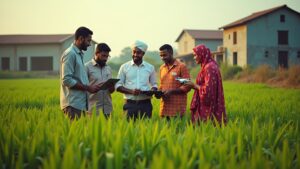










As you navigate the complex landscape of Indian agriculture, the recent forecast from Skymet signaling a weaker monsoon in 2026 demands your strategic attention. The monsoon isn’t just a seasonal weather pattern—it’s the heartbeat of India’s agribusiness ecosystem. Understanding the implications of this forecast is pivotal for your decision-making, investment planning, and operational resilience in a sector where climate variability increasingly dictates outcomes.
Why the 2026 Monsoon Forecast Demands Your Focus
The monsoon season underpins the productivity of key crops, the stability of supply chains, and the financial health of farm businesses across India. A weaker monsoon, as predicted, introduces uncertainty that can ripple through your agribusiness operations, from fluctuating crop yields to disrupted commodity flows and elevated risk profiles for farm finance portfolios. In other words, this forecast isn’t simply meteorological data—it’s a strategic signal for your entire value chain.
Understanding the 2026 Monsoon Outlook and Its Agricultural Implications
Skymet’s projection of reduced rainfall next year must be viewed in the broader context of evolving climate patterns and seasonal variability. Historically, weaker monsoons have correlated with diminished sowing areas, lower crop output, and heightened pressure on water resources. Given India’s agrarian economy and the dependency of millions of smallholders and agribusiness enterprises on monsoon rains, the 2026 forecast poses a significant challenge.
Key Business and Market Impacts You Must Anticipate
- Crop Yields and Farm Profitability: Reduced rainfall directly affects yield volumes for staples like rice, wheat, and pulses, compressing margins across your supply chain.
- Supply Chain Disruptions: Erratic weather conditions lead to unpredictable harvest timelines, impacting inventory planning, logistics, and export commitments.
- Farm Finance Risk: Increased likelihood of loan defaults and tighter credit conditions as cash flows of farmers face strain, compelling financiers to reconsider lending frameworks.
- Policy and Regulatory Pressure: Anticipate shifts in government support schemes, subsidy allocations, and water management policies aimed at mitigating the weak monsoon fallout.
Strategic Analysis: Navigating Climate Risk Through Innovation and Adaptation
The weaker 2026 monsoon serves as a clarion call for agribusiness leaders like you to embed climate resilience into your operational DNA. Embracing agritech solutions, from precision irrigation systems to drought-tolerant seed varieties, enables you to buffer against yield volatility. Moreover, rethinking your risk management frameworks to include climate risk analytics and adaptive crop insurance products can safeguard your financial sustainability.
“In agriculture, timing is rarely just operational — it is strategic.” This insight underscores the importance of aligning your business cycles and innovation investments with climate forecasts to stay ahead.
Practical Takeaways for Agribusiness Leadership
- Monitor real-time climate data: Invest in digital tools that provide granular weather and soil moisture analytics to support proactive decision-making.
- Prioritize climate-resilient agritech: Accelerate adoption of technologies such as smart irrigation, automated soil health monitoring, and seed innovation.
- Revamp farm finance models: Incorporate flexible repayment options and climate-linked credit products to support farmer liquidity under stress.
- Engage with policy dynamics: Stay informed of evolving agricultural policies and align your compliance and lobbying efforts accordingly.
Expert Perspective
“The real opportunity is not in reacting late, but in understanding where the market is moving next.”
“When policy, technology, and farm economics align, growth becomes more scalable.”
Risks and Challenges You Must Manage
A weaker monsoon entails risks beyond reduced water availability. You must consider the socio-economic impacts on rural communities, potential shifts in crop patterns, and the difficulty of integrating new technologies across fragmented farming systems. Additionally, supply chain complexities will intensify as disruptions cascade, demanding agile contingency strategies. The financial strain on farmers could translate to tighter consumer demand downstream, affecting commodity prices and profitability.
What to Watch Next: Signals and Developments for Your Strategic Radar
- Updated monsoon and climate model forecasts: Track subsequent meteorological releases for refined predictions.
- Government announcements on drought mitigation and agricultural support: Policy initiatives could reshape subsidy and credit landscapes.
- Agritech innovation rollouts: New products and platforms designed for climate resilience may redefine competitive advantage.
- Supply chain intelligence and commodity market trends: Fluctuations in pricing and logistics must be continuously monitored to adjust your strategies.
Conclusion: Positioning Your Agribusiness for a Climate-Resilient Future
Facing the 2026 monsoon forecast, your agribusiness strategy must evolve from reactive risk management to proactive resilience building. This means integrating agritech innovation, recalibrating your finance frameworks, and engaging with policy shifts decisively. By doing so, you don’t merely survive climate variability—you position your business to capitalize on emerging opportunities in sustainable farming and supply chain optimization.
Mastering the impact of climate risk in farming isn’t just prudent; it’s essential for enduring profitability and leadership in India’s vibrant agricultural sector.