











As someone steering agribusiness, shaping agricultural policy, or driving investment in India’s farm economy, you need to see beyond the immediate headlines about El Niño. The Agriculture Ministry’s assertion that India is better prepared today than it was in 2016 isn’t just a comforting statement. It signals a significant evolution in how India strategically manages climate risk and builds resilience within its agriculture sector. Understanding this shift empowers you to harness new opportunities and safeguard your operations against one of the most unpredictable climate phenomena affecting crop yields and supply chains.
Why India’s Improved El Niño Preparedness Matters to You
El Niño events have historically introduced severe weather disruptions such as delayed monsoons, droughts, and temperature spikes that destabilize crop production and rural economies. For industry leaders like you, who operate at the nexus of agriculture, finance, and technology, recognizing India’s enhanced preparedness highlights a broader policy-driven, innovation-led transformation. It means that the agricultural risk management frameworks you rely on are becoming more robust and forward-looking. This resilience will trickle down to stabilize markets, secure investments, and improve the predictability of supply chains critical to your business and farming communities.
What Has Changed: From Past Vulnerability to Present Readiness
In 2016, India’s encounter with El Niño exposed gaps in adaptation, policy coherence, and agritech implementation. Now, the Agriculture Ministry points to strides made in key areas:
- Policy Frameworks: Integrated climate risk mitigation policies aligned with crop insurance, water resource management, and rural development schemes.
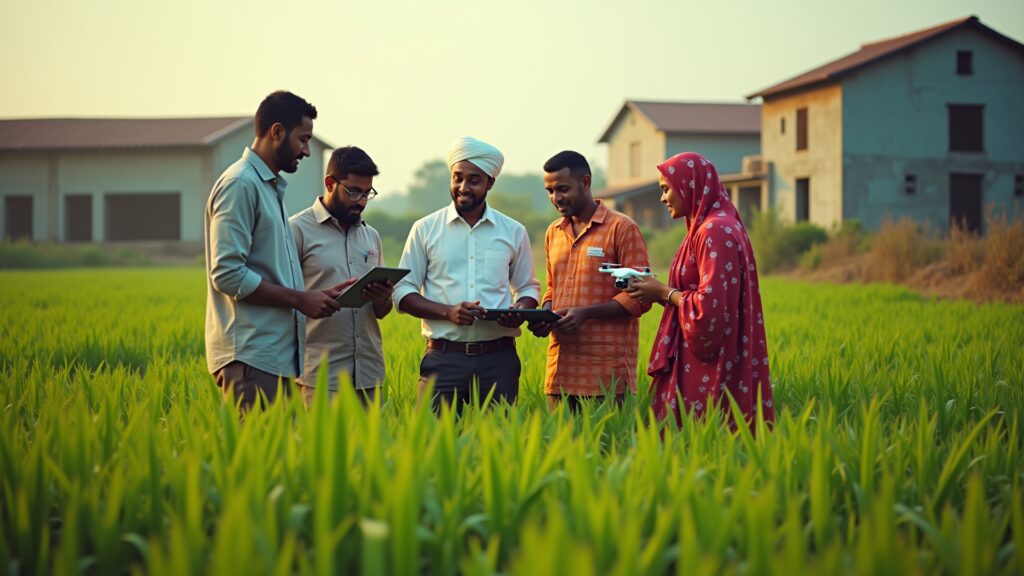
- Agritech Adoption: Broad use of satellite monitoring, AI-driven weather forecasting, and digital advisory platforms that provide real-time insights to farmers and supply chain managers.
- Market and Supply Chain Resilience: Strategies enhancing storage, distribution, and logistics to withstand climate shocks, ensuring smoother flow from farm to market.
- Financial Instruments: Enhanced agricultural finance products tailored for climate risk, enabling farmers and agribusinesses to recover faster.
These developments reflect an emerging ecosystem where technology, policy, and finance converge to buffer Indian agriculture from El Niño’s stresses more effectively than ever before.
Impact on Agribusiness, Policy, and Market Dynamics
For agribusinesses, better El Niño preparedness means you can make investment decisions with greater confidence, supported by government policies that reduce exposure to climate volatility. Opportunities arise in developing climate-resilient seed varieties, expanding agritech solutions, and scaling financial products specialized for risk-prone environments.
Policywise, this readiness sets a precedent for proactive governance that emphasizes prevention over crisis response — vital for stabilizing rural economies and sustaining farm incomes. It also encourages public-private partnerships focused on innovation-driven sustainability, creating a more dynamic agricultural sector.
Market systems benefit too, as risk mitigation reduces price shocks and disruption in supply chains. The enhanced predictability attracts investors seeking stable returns in agri ventures, driving long-term capital flow into sustainable farming and rural infrastructure.
Strategic Insights: Leveraging India’s Climate-Adapted Agriculture Future
Understanding the interplay of policy, technology, and financial innovation is crucial for you to capitalize on this shift. Strategic action points include:
- Aligning agribusiness strategies with India’s climate risk policies to access incentives and support schemes.
- Investing in agritech solutions that enhance data-driven decision-making and climate forecasting accuracy.
- Integrating supply chain enhancements that prioritize flexibility and redundancy to absorb climatic shocks.
- Engaging with financial products engineered for climate resilience to manage cash flow and operational risks.
“In agriculture, timing is rarely just operational — it is strategic.” This adage underscores the value of anticipation and preparation you can embed in your business model amid changing climate realities.
Practical Takeaways for Agribusiness Leaders and Investors
- Monitor government policy announcements for new climate risk mitigation schemes in agriculture.
- Evaluate and adopt agritech platforms that integrate weather analytics and supply chain tracking.
- Consider climate risk upfront when structuring investments or partnerships with farm enterprises.
- Develop contingency plans that leverage financial instruments like crop insurance and credit lines designed for El Niño conditions.
- Collaborate with rural stakeholders to enhance community-level resilience, which underpins supply chain stability.
Remember, “The real opportunity is not in reacting late, but in understanding where the market is moving next.” Your awareness and responsiveness to these climate shifts will define competitive advantage.
Challenges and Risks: Remaining Vigilant Despite Progress
While India’s preparedness has improved, risks remain. Climate variability is inherently uncertain, and El Niño’s impact varies regionally. Limitations in infrastructure, technological access for smallholder farmers, and funding gaps can constrain adaptation effectiveness. Additionally, policy execution often faces bureaucratic hurdles that delay benefits from reaching the ground promptly.
For you, this means sustaining vigilance in risk assessment and continuing to innovate in resilience-building, rather than assuming past improvements are failproof safeguards.
What to Watch Next: Emerging Trends in Climate-Adapted Agriculture
Tracking developments in the following areas can offer early insights into India’s evolving El Niño response landscape:
- Advances in AI-enhanced agronomic advisory services.
- Policy reforms aimed at integrating climate risk in national agricultural finance schemes.
- Expansion of sustainable irrigation technologies linked to weather prediction systems.
- Cross-sector collaborations leveraging blockchain for transparency in supply chain resilience.
“When policy, technology, and farm economics align, growth becomes more scalable.” Staying informed on these intersections positions you to lead rather than follow in climate-resilient agriculture.
Conclusion: Positioning Your Agribusiness in a Climate-Resilient India
India’s improved El Niño preparedness reflects more than just readiness — it embodies a strategic transformation in how agricultural risk management, policy, and technology converge to protect and grow the sector. For you, this is a clarion call to embed climate resilience at the core of your strategic decisions, investment priorities, and operational planning. By doing so, you not only shield your business from volatility but also drive innovation and sustainability that define the future of Indian agriculture.
Embrace this moment to anticipate risks, capitalize on emerging tools, and contribute to a robust rural economy. Your leadership in climate-adaptive agriculture today shapes a more secure, profitable tomorrow.